Ever wonder why food poisoning is still around, even though there are new ways to make our food safer? It keeps coming back like that same old problem. This blog talks about the most common things people still get wrong about food safety, going back fifty years. You will read about the kinds of pathogen that get in food and make people sick. The blog also shares what you can do to avoid making food safety mistakes. Let’s find out what is really going on with our food. That way, we keep meals and the people we love safe!
Food poisoning is more than just feeling sick after you eat bad food. It is a big health risk that comes when there are bacteria, viruses, or toxins in food. Food that goes bad may just taste wrong, but food poisoning can bring a lot more trouble. Symptoms can range from nausea and vomiting to diarrhea and fever. There are times when someone will need to go to the hospital, and in rare cases, people can die from it. It is important to learn more about food poisoning so you and other people can be safe.
Watch the Video to know more about food poisoning.
Some people can eat anything and feel fine… but others fall sick very quickly. These groups are what we call vulnerable populations, and they need extra protection.
Who are they?
For these groups, food poisoning isn’t “just diarrhea.” It can turn serious very fast. Why? Because their bodies cannot fight bacteria or toxins as quickly as healthy adults.
Takeaway: Knowing who is at higher risk helps us stay more careful when preparing, buying, or serving food — especially for children and elderly family members at home.
Most food poisoning cases clear up in a few days, but sometimes things get more serious. Here are complications that can happen, even though many people don’t realise:
Takeaway: This is why food safety matters. It’s not just “stomach-ache saja.” Some bacteria can cause long-lasting problems.
Most cases are mild and can be managed without going to the hospital. Here’s what you can do:
❗ When to see a doctor:
Takeaway: Most people recover at home, but don’t wait too long if symptoms worsen.
Food poisoning may sound like a small issue, but when it happens on a large scale, the impact is shocking. One of the most recent and serious incidents in Malaysia happened at a theme park in Selangor. According to several news reports, more than 322 people suffered food poisoning after attending a Family Day event held at a theme park in Selangor. Many participants experienced symptoms such as vomiting, diarrhoea and stomach cramps.
Sources: Free Malaysia Today, Sinar Daily, Malay Mail, Scoop.
JKNS found that the outbreak happened because several food safety mistakes occurred at the same time. Some of the food served was already contaminated, and the kitchen equipment used was not properly cleaned, allowing bacteria to spread. Cooked food was also left out too long at room temperature, giving pathogen time to multiply. With too few food handlers preparing a very large amount of food, hygiene steps like cleaning and temperature checks were likely overlooked. These are exactly the types of risky practices that lead to outbreaks in canteens, food fairs, catering events, and even home-based operations.
To prevent further risks, the theme park kitchen involved was ordered to shut down for 14 days for deep cleaning and sanitation before it could reopen. This action shows how serious food poisoning cases can become when hygiene breaks down.
“Food poisoning can happen anywhere, to anyone, if safety steps are ignored.”
When we understand how contamination happens, we can better protect ourselves, our families, and our communities. Even large, well-known locations like theme parks can make the same mistakes found in small eateries or school canteens.
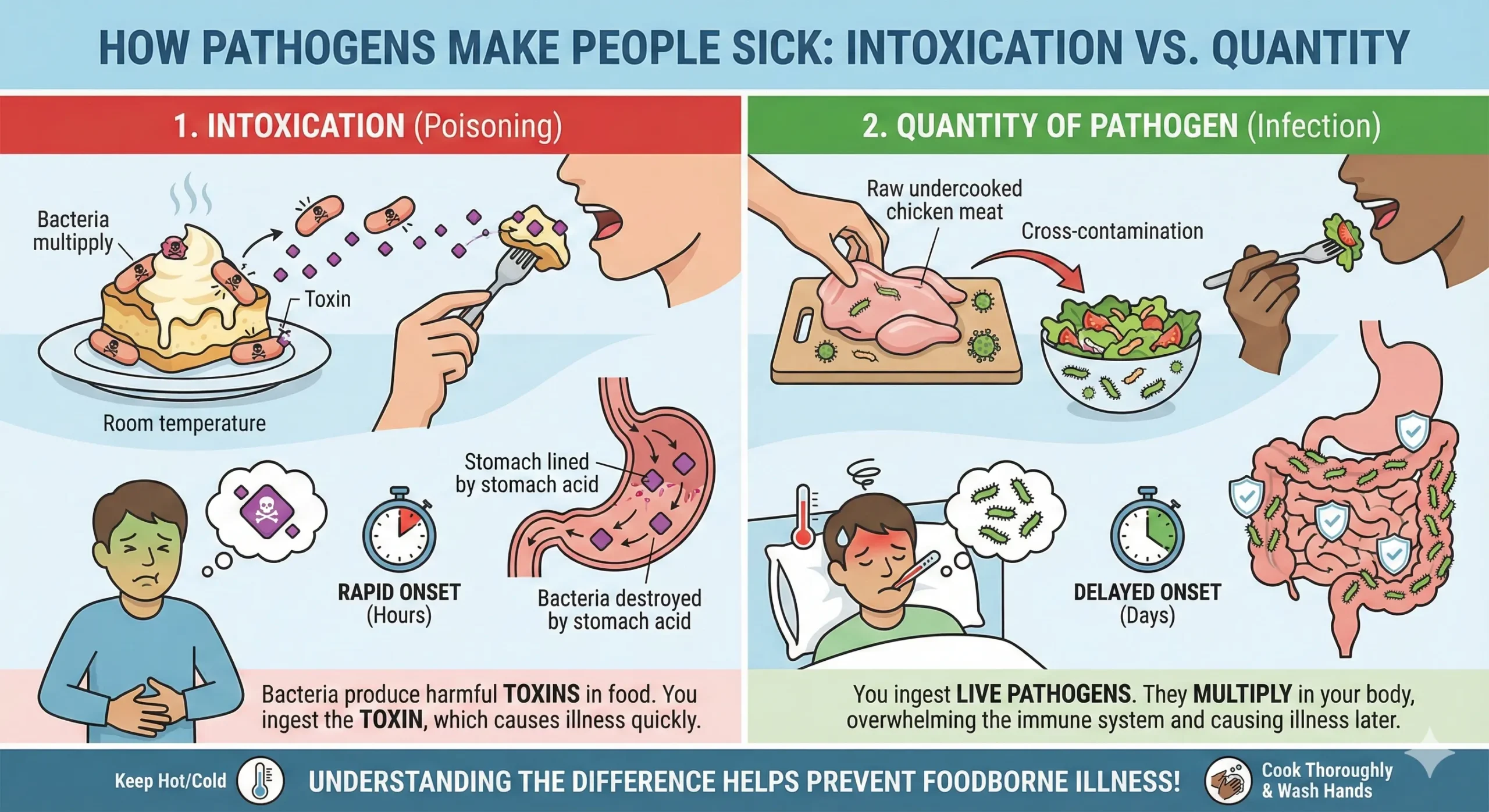
It is good to know how food poisoning happens, as this can help us stay away from it. Food poisoning mostly happens in two main ways. The pathogen that cause this can make people sick in these ways.
This includes raw meat, vegetables that are not washed and unpasteurized dairy. Eating these foods can put harmful bacteria into the body’s digestive system.
When people who work with food do not wash their hands the right way, pathogen can go from their hands or dirty places to the food. If utensils and surfaces are not cleaned well, these pathogens can also get into the food.
Undercooked meat, such as chicken and ground beef, can have pathogens that are bad for health. You need to cook food at the right temperature to kill these pathogens before they enter your body. This keeps you and the people you care about safe from getting sick.
This can happen if raw foods get in contact with ready-to-eat foods. For example, when you use the same cutting board for raw chicken and salad, bacteria can move from one food to the other.
When you leave food out at room temperature, the bacteria can grow quickly. It is good to put the food in the fridge soon. This helps stop pathogen from growing.
When we know what causes food poisoning, we can take steps to prevent food poisoning and keep our meals safe!
These are some of the big names you should watch out for.
| Pathogen | Common Foods | Risks |
| Salmonella | Raw eggs, chicken | Diarrhea, fever |
| E. coli | Undercooked beef | Severe stomach cramps, kidney failure |
| Listeria | Soft cheeses, deli meats | Severe illness in pregnant women |
| Campylobacter | Undercooked poultry | Diarrhea, fever |
| Norovirus | Contaminated water, salads | Vomiting, stomach pain |
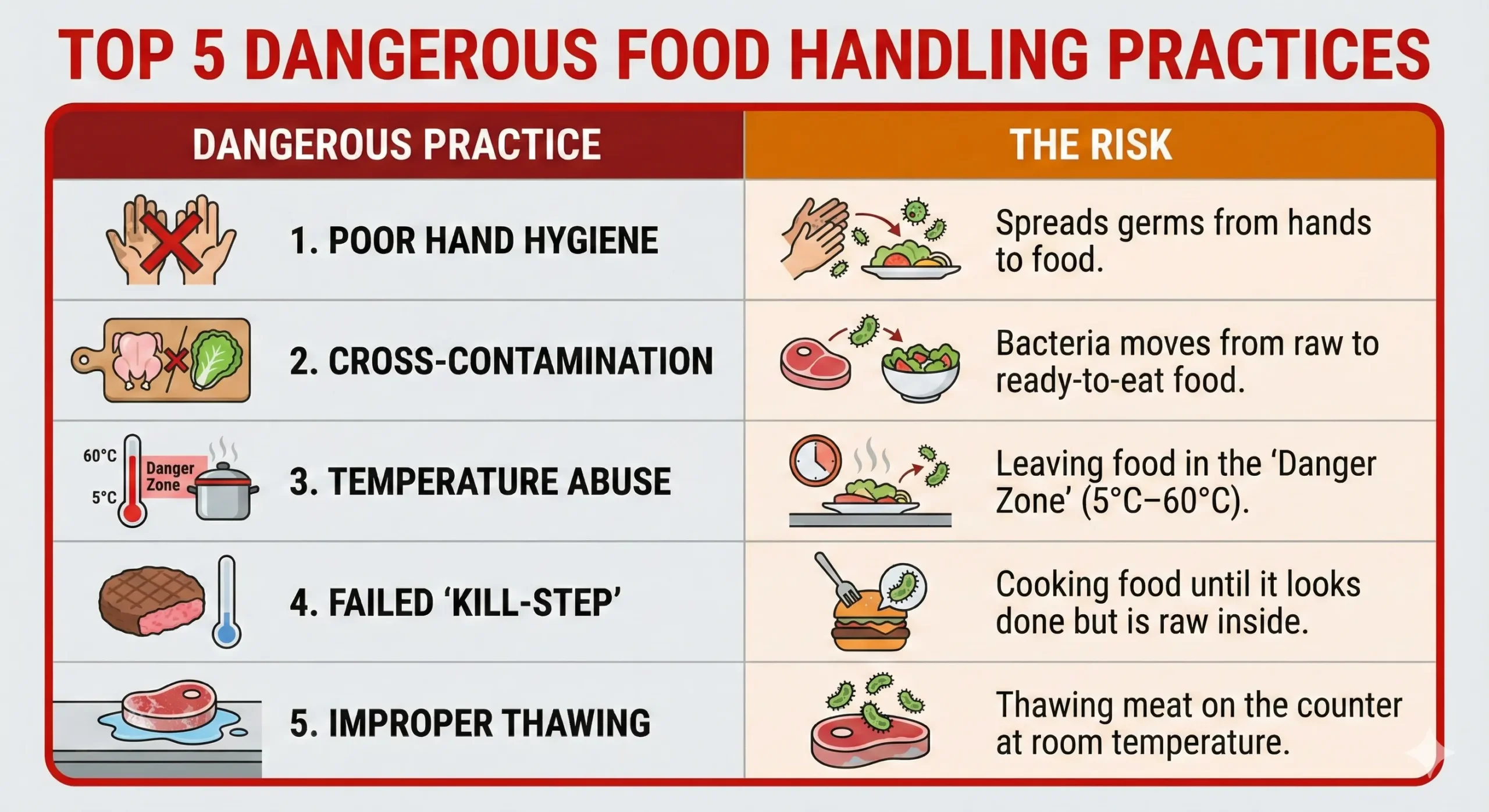
Even though people know about the risks, dangerous practices still show up often at food stalls, restaurants and school canteens. These practices can significantly increase the risk of food poisoning:
One of the most simple and important things you can do for food safety is to wash your hands the right way. However, many food handlers neglect this essential practice. For example, when staff prepare food without washing their hands after using the toilet or touching raw meat, they can spread harmful bacteria. It’s shocking to think that something as simple as a dirty hand can lead to a foodborne illness outbreak!
This can happen when raw foods come into contact with ready-to-eat foods. For example, it can be a problem if you use the same cutting board for raw meat and fresh vegetables. Bacteria, such as Salmonella or Campylobacter, can go from the raw meat to veggies. If you prepare a salad on that same surface where you handled raw meat, the salad can pick up pathogen. This can put anyone who eats the salad in danger.
A common mistake in many eateries and canteens is leaving cooked food sitting out at room temperature for too long. For example, if a tray of fried rice is left on the counter for several hours, bacteria can grow very quickly and make the food unsafe to eat. To keep food safe, cold food should be kept below 5°C, and hot food should be kept above 60°C so harmful bacteria don’t have a chance to multiply.
Some germs in food can only be killed when the food is cooked to the right temperature. However, some places still serve undercooked meat, especially chicken and minced beef. For example, if chicken not cooked to at least 75°C, it might still contain dangerous bacteria that can make people very sick.
Allergens are often overlooked but the risk they pose can be serious. When canteen or restaurant staff fail to label ingredients correctly, reuse contaminated utensils, or serve meals without checking for allergies, they put customers at serious risk. For example, a student with a peanut allergy could have a severe reaction just because the same spoon was used for both peanut sauce and curry.

When we fix these small mistakes in places like restaurants and school canteens, it can help cut down the chance of people getting food poisoning. This makes eating there safer for all of us.
Food safety hazards are divided into three main types. They are biological, chemical, and physical hazards. Understanding these categories is crucial for food technologists and industry professionals as they develop strategies to combat food poisoning.
This group has bacteria, viruses, and parasites that can get into the food and make people sick. Salmonella, E. coli, and Listeria are some of the most common examples. Food technologists work to find out where these pathogens may come from and put in control measures to stop them. Which includes cooking food at the right temperature, keeping food cold enough, and cleaning things well. Food handlers also need to get regular training, so they know how to spot and control these risks. This helps people understand the risks and take steps to keep all the food safe.
Chemical hazards are problems that happen when chemicals get into food by mistake. This can include pesticide residue on fruits and vegetables, too many food additives, or cleaning chemicals that not rinsed off properly in the kitchen. Food experts help set safe limits for these chemicals and make sure legal regulations are complied. It’s also important to train staff on proper cleaning methods and to use only food-safe products so that chemicals don’t end up in the food.
This group is for things in food products that are not supposed to be there. It can be hair, tiny pieces of glass, or metal from tools. To prevent this, food experts put strict checks in place to make sure food is free from these items. This includes regular inspections, proper equipment maintenance, and employee training to handle food safely. Knowledge of potential physical hazards allows food handlers to adopt practices that reduce the risk of contamination.
In the food industry, continuous education and training are extremely important for keeping food safe. When food handlers and staff know how to spot and manage different food hazards, businesses can ensure compliance with legal requirements and create a strong safety culture. Good food safety practices not only protect customers but also improve the business’s reputation and increase customer trust.
In the end, knowledge is what keeps food safe. When people understand the different types of hazards and how to control them, the number of food poisoning cases can be greatly reduced, helping protect public health.
Even after 50 years, food poisoning cases are still not decreasing. It’s not that bacteria have become stronger — it’s that our awareness and understanding of food safety haven’t kept up.
Now, let’s see what you know about food safety. I have some simple questions here. Let’s find out how much you get food safety.
Feeling confident? Time to share your knowledge with friends and family! Let’s make food safety a community effort!
Food poisoning happens when you eat food that has bacteria, viruses, or toxins in it.
Check the expiration date. Look for any signs that the food is bad. Make sure it has been stored in the right way.
Yes, this is true. When you do not store or heat them the right way, there can be problems.
It is important to see a doctor, especially if the symptoms get worse.
Yes, children, pregnant women, and old people can be at higher risk.
Be sure to practice safe food handling. Cook your food the right way so it is safe to eat. Put your food in the right spot to keep it good for longer.
Rinse them under running water and scrub if necessary.
Yes, but if people use food safety steps, the risk goes down. Food safety is key and it helps cut the chance of something going wrong. Food safety practices also help make sure the food is good for everyone.
Food poisoning seems simple, but it can turn into serious health issues if we don’t treat it with care. We should learn from past events. It is also important to spot mistakes that are still happening now.
This way, we can keep, us, our loved ones, and others safe. Let us promise to practice safer habits with food and share what we know with people around us. When we all work together, food safety will be important to everyone.